Superbill template
- Total charges for the visit
- $180
- Computed on this page from the inputs below
- Line 1 total
- $90
- Computed on this page from the inputs below
- Line 2 total
- $52
- Computed on this page from the inputs below
- Line 3 total
- $38
- Computed on this page from the inputs below
Every figure on a worksheet comes from the inputs you enter and the method stated beside it: your minutes, your charges, your EOB amounts and your month's counts. Where a guide names a published rule, the document is cited with a path to the clause, and the figure is licensed in this repository's claims ledger before it appears on a page.
Email me this result
We will send you these figures and a link back to them. One email, nothing else unless you tick the box.
The figures start from a worked example ($180), one visit or one claim from a typical small practice. Change any input and the answer recomputes as you type.
Download the Superbill template worked example (CSV)
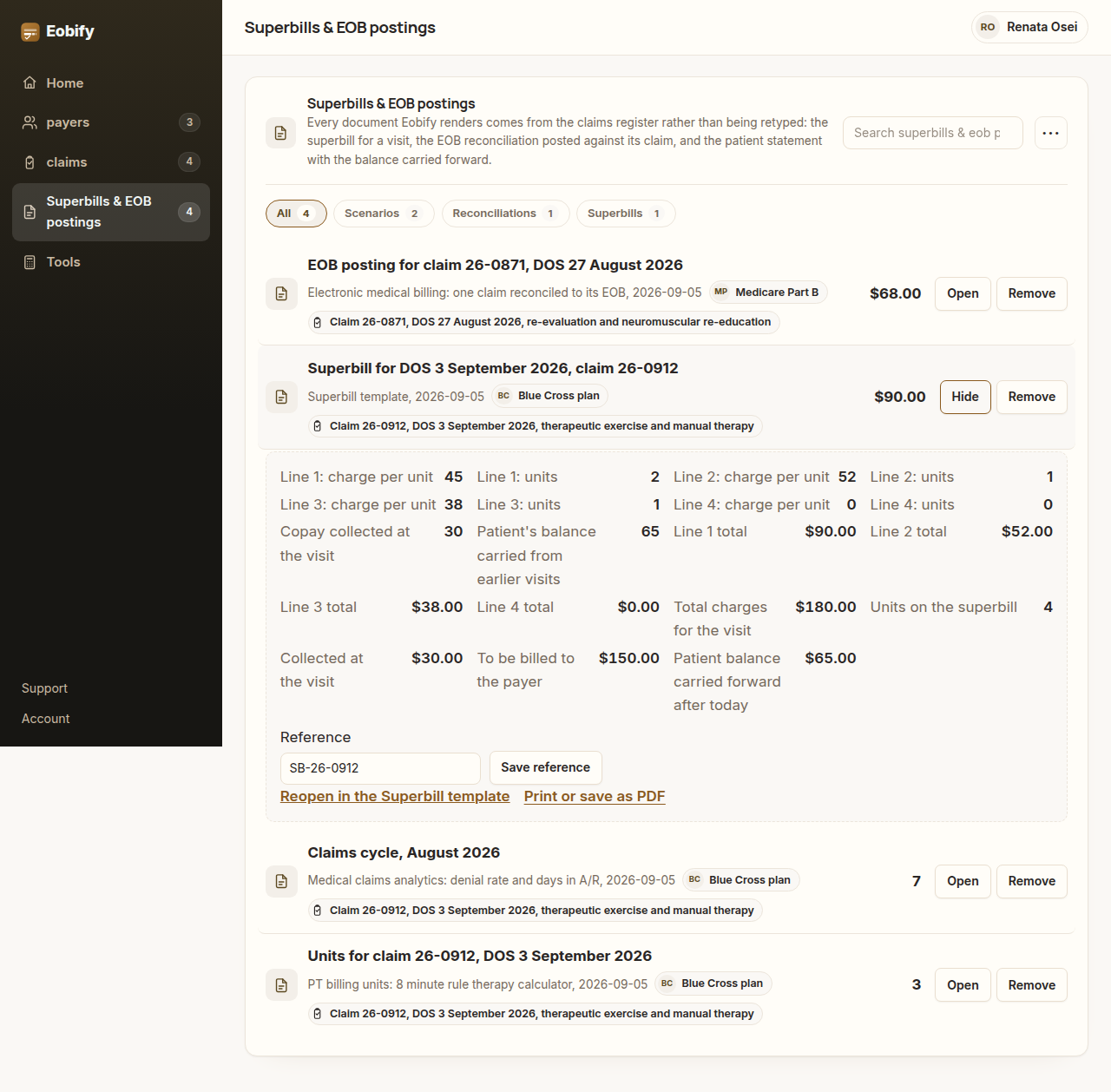
A superbill template is the encounter form the claim is built from: the practice's details, the patient's, the diagnosis and procedure codes written on the lines, the charge and the units on each line, the total, what the patient paid at the visit and what is carried forward. This worksheet takes four lines with a charge and units each, the copay collected and the prior balance, and returns the line totals, the total charges for the visit, the units, the amount collected at the desk, the amount to be billed to the payer and the balance carried forward. The codes themselves are written on the printed superbill rather than looked up here, because this site publishes no code set.
Where the constants in this tool come from
Superbill template: what billers ask
What goes on a superbill?
The practice's name, address and NPI or tax ID; the patient's name and date of birth; the date of service and the rendering provider; the diagnosis codes; each procedure code with its units and charge; the totals; and what the patient paid. The worksheet computes the totals; the printed superbill carries the rest.
Is a superbill the same as a claim?
No. The superbill is the practice's own record of the visit and its charges, signed at the desk. The claim is built from it on the CMS-1500 or its electronic equivalent and sent to the payer. Most small practices keep both, and the register links them by the date of service.
Should the copay be subtracted from what is billed to the payer?
The claim to the payer carries the full charges; the copay is reported as collected and the payer's EOB applies it. The worksheet shows the amount to bill as the total less the copay only to show what is still owed for the visit, and the method line says so.
Eobify Pro
Keeping the claims register instead of the spreadsheet
Upgrading turns a worked claim into a register. The EOB you reconciled on the worksheet is posted against the claim it paid; the denial is recorded with its code and the appeal with its date; the patient balance carries forward to the next statement; and the month's denial rate, clean-claim rate and days in A/R are a report rather than a spreadsheet nobody trusts.
- Download the superbill or the statement as a file
- Your superbills and statements without our name on them
- Save a claim and reopen it when the EOB arrives
- Your practice name and logo on every printed superbill and statement
- Take every claim, posting and statement out at once
- Send a patient their statement from inside the register
- Not sold on this hub: a practice collects its copays at the desk, not through us
- Not sold on this hub: the month's figures export to your accountant instead
$49per month, whole team
Start Eobify Pro Free for 14 days. No card needed. PricingThe first 14 days are free and no card is asked for. Add a card during the trial and the first charge is on the day it ends; do not, and your workspace becomes read-only with nothing deleted. Eobify Pro is $49 per month for your whole practice, billed monthly, and renews each month at that price until you cancel. The price and the renewal terms are shown again before checkout.